
Why do some jewelry brands get tons of messages in Direct that never end in payment? The main reason lies not in bad creatives, but in the lack of a systematic approach.
As an expert in Google and Meta Ads (8+ years in marketing), I gathered all my experience in scaling e-commerce and packaged it into a single working framework.
Below is my detailed analysis of a Full-Funnel funnel for a silver jewelry store. This is a step-by-step strategy for segmenting and working with traffic that you can take and adapt to your business.
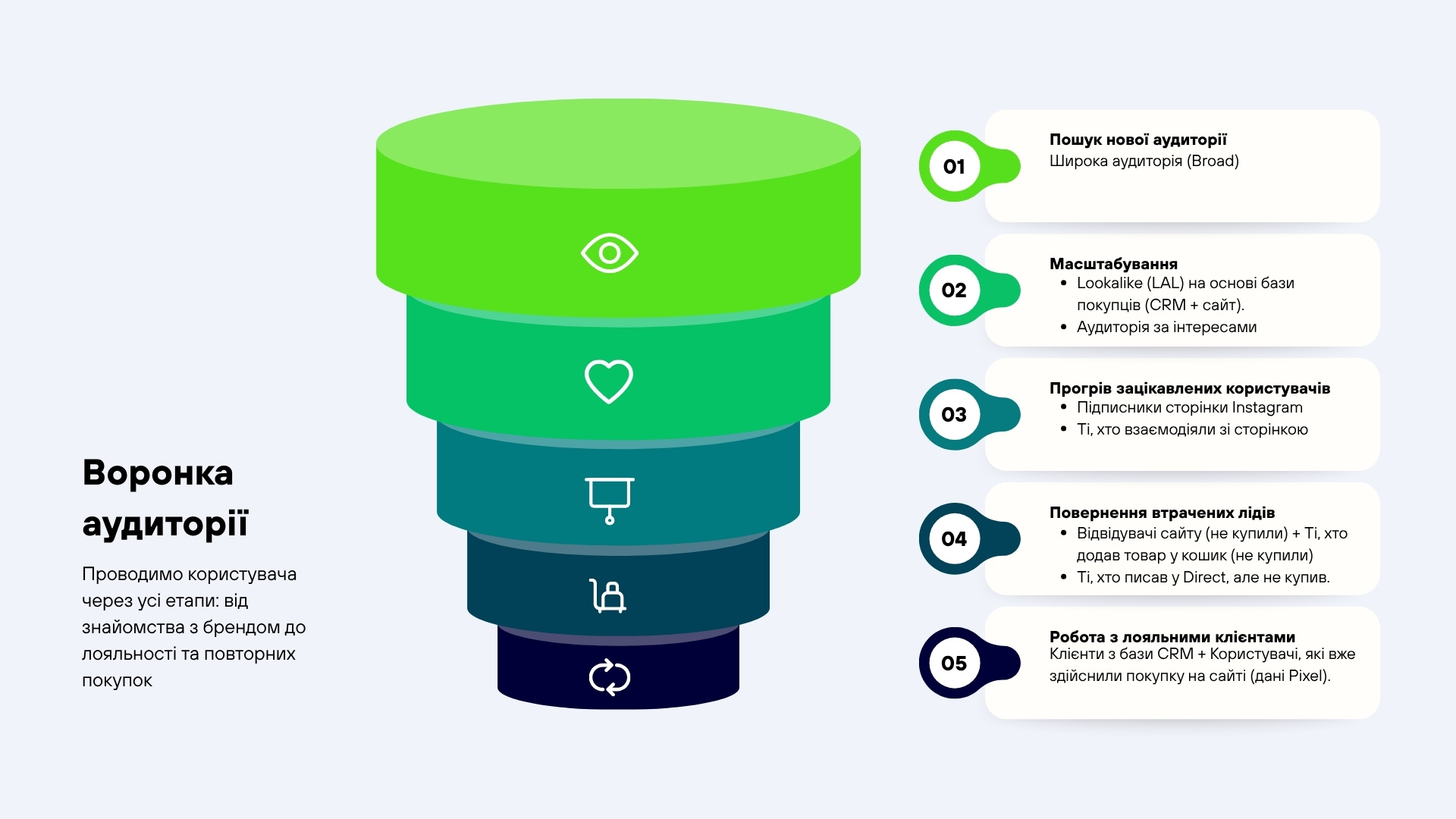
1. Full-Funnel Architecture (from Acquisition to Retention)
- Instead of just "pouring traffic to the site," we build a 4-stage funnel:
- Stage 1: Scaling and finding a new audience (Acquisition). Here we work with a broad audience (Broad) and Lookalike (LAL) based on the customer base (CRM + site). Our goal is to attract new cold traffic.
- Stage 2: Warming up interested users. We work with those who interacted with or followed the Instagram page.
- Stage 3: Returning lost leads (Retargeting). We catch up with site visitors who added products to the cart but did not buy, as well as those who wrote in Direct but stopped one step before payment.
- Stage 4: Working with loyal customers (Retention). We launch ads to customers from the CRM database and users who have already made a purchase on the site. This is the hottest audience with the highest ROMI.
2. Communication Strategy: What to Show at Each Stage
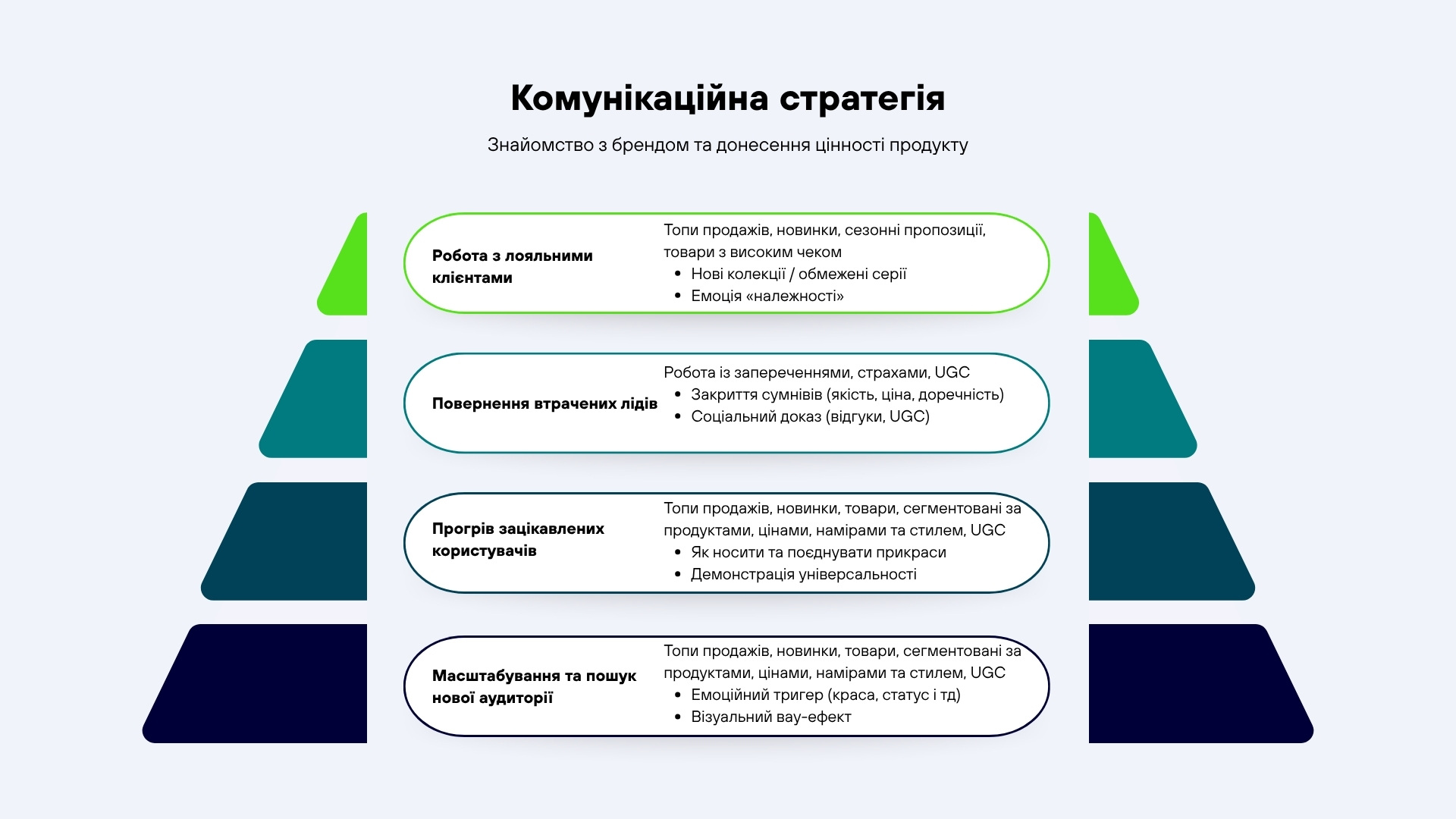
For ads to work, the message must match the audience's warmth:
- For cold audiences (Introduction): We use emotional triggers (beauty, status), create a visual wow effect, and show best-selling products.
- For warming up: We demonstrate versatility — how to wear and combine jewelry, using UGC (user-generated content).
- For returning leads: We work with objections and fears. We close doubts about quality, price, and appropriateness, providing social proof (reviews).
- For loyal customers: We offer new collections, limited editions, seasonal offers, and high-ticket items, creating a feeling of "belonging."
3. Product Segmentation — The Key to Optimization
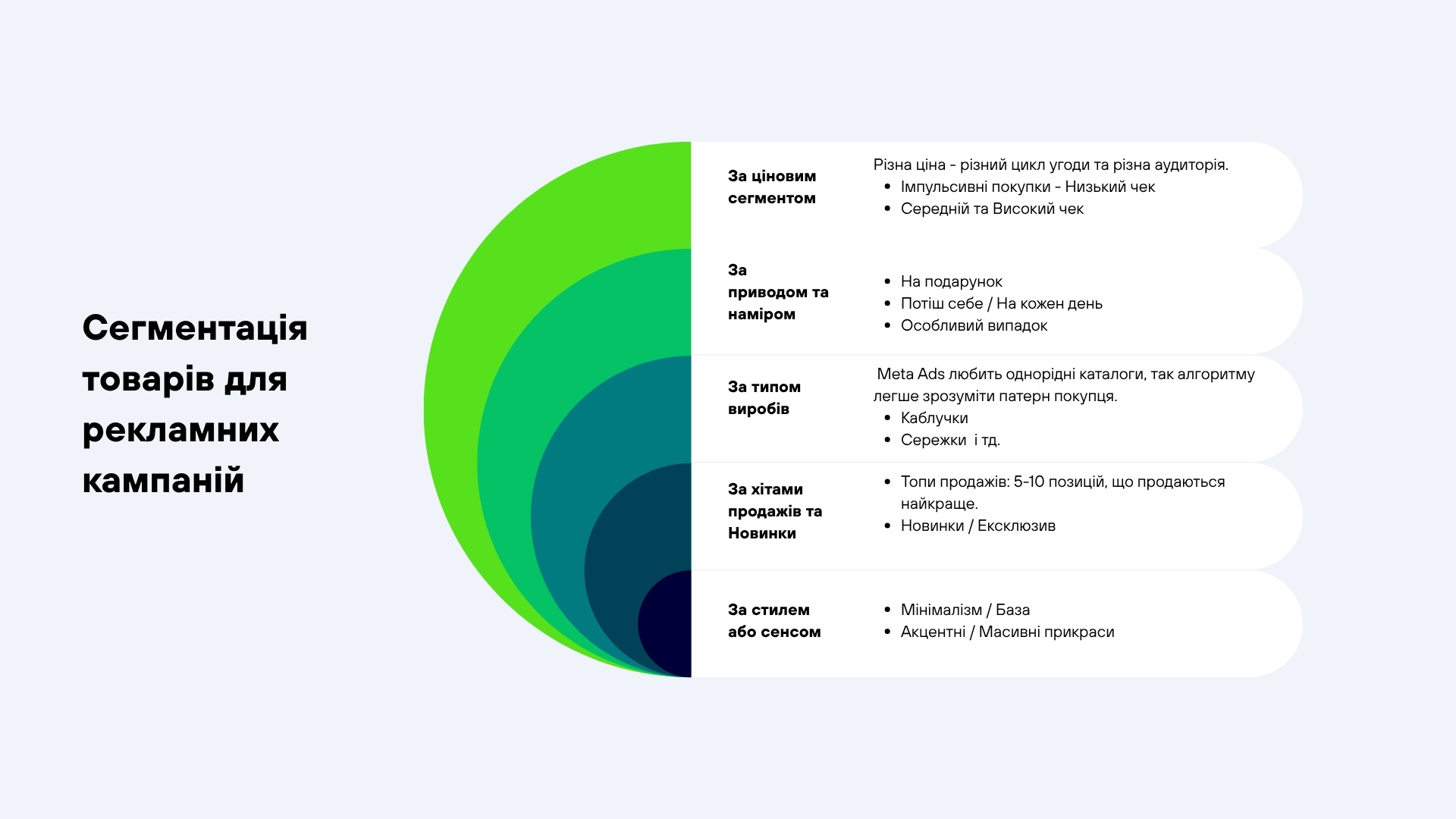
Meta Ads loves homogeneous catalogs, as it is easier for the algorithm to understand the buyer's pattern. Therefore, jewelry must be segmented for advertising campaigns:
- By price segment: Impulse purchases (low ticket) are separated from mid- and high-ticket items.
- By occasion and intent: We create separate offers "For a gift," "Treat yourself / Everyday," and for "Special occasions."
- By type of product: Rings separately, earrings separately.
- Bestsellers vs New arrivals: Top sellers (5-10 items) are launched to cold audiences, while exclusives and new arrivals target loyal customers.
- By style: We separate minimalism/basic and accent/massive jewelry.
4. Multi-format Approach to Creatives
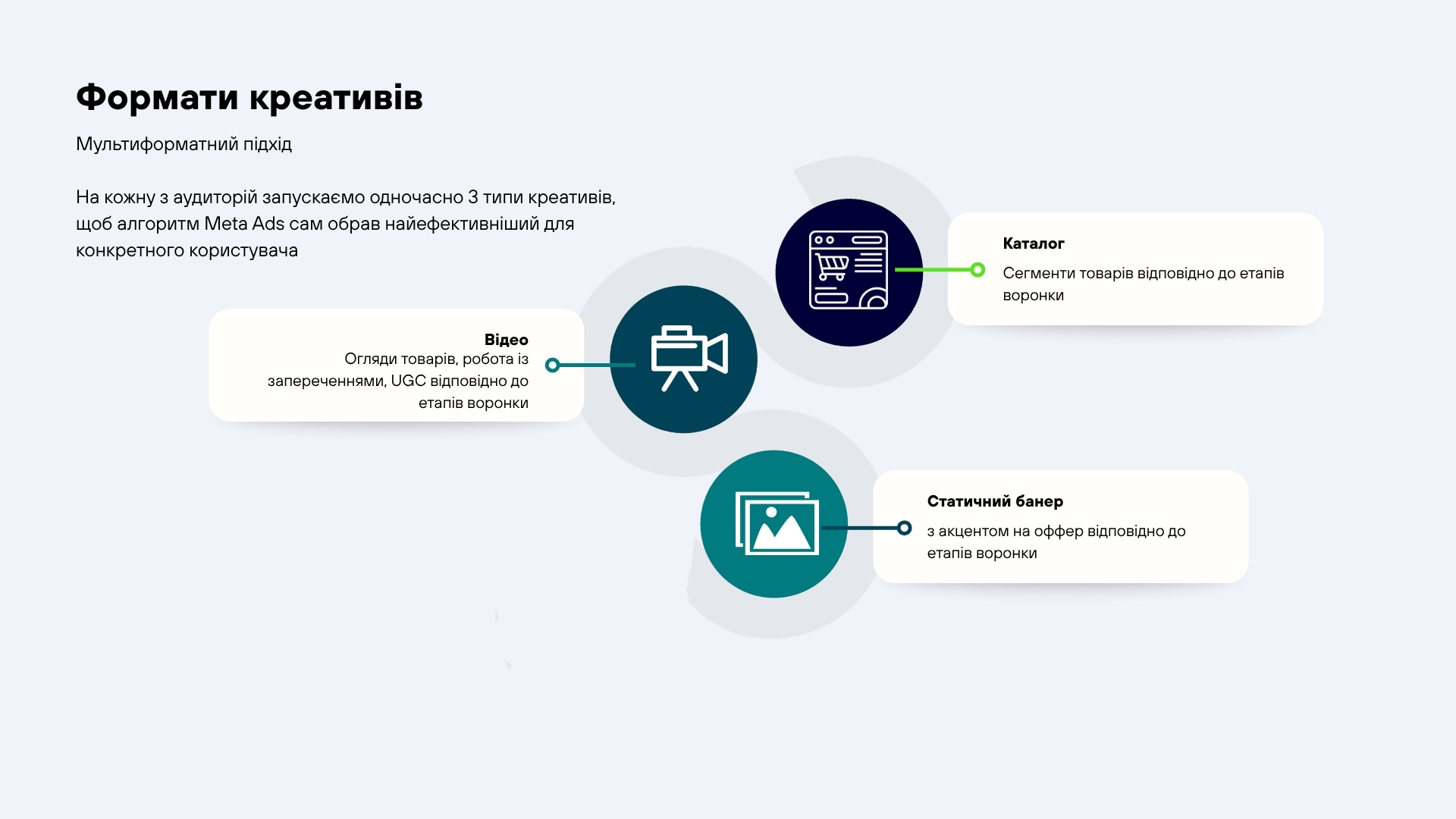
For each audience, we launch 3 types of creatives simultaneously:
- Video: Product reviews, UGC, addressing objections.
- Catalog: Dynamic product segments.
- Static banner: With a clear focus on the offer.
This approach allows the Meta Ads algorithm to choose the most effective format for each user.
Conclusion
Scaling a jewelry brand requires a deep understanding of analytics, buyer psychology, and advertising system algorithms. This framework is a step-by-step plan that you can adapt to your e-commerce projects.